Description
MikroTik MTCNA Training in London
Date: 4th – 6th August 2026
Location: 13-15 Great Scotland Yard, London, SW1A 2HJ
Course Overview
MikroTik’s official training course outline is available here. This 3 days intensive course will be based on Version 7 of RouterOS. The MTCNA certification is a mandatory requirement before taking any of the higher level engineering certifications. Included in the course is a free training manual and a free MikroTik WiFI6 (802.11ax) Wireless Router to take away with you!
The Trainer
The training course is being delivered by Ron Touw (MikroTik Certified Trainer Number TR0057). Ron has over 45 years experience in RF and WiFi systems, 20 years of networking and over 15 years of specialising in using MikroTik products by designing, building and running a Wireless ISP service made entirely from MikroTik products which is still running today with hundreds of customers, delivering wireless hotspots to a number of Marinas and hotels in Guernsey as well as offering consultancy services to many other ISPs, PLCs and foreign National Banks utilising MikroTik equipment around the world for complex MPLS/VPLS setups securely interconnecting their remote branches and ATMs back to multiple Data Centres.
Unlike other hardware vendors, MikroTik does not supply their Trainers with pre-prepared ‘stock’ slide decks or student training packs for the trainer to merely stand at the front and read from. Each MikroTik Trainer must create their own materials using their own wealth of knowledge, experiences and skills. Therefore although each training course will be required to follow the published official MikroTik syllabus outline as a minimum, it will still be influenced by the quality of the trainer which can potentially result in a variable experience. MikroTik monitors a number of metrics when publishing a list of trainers on their website. They examine each student’s feedback, their examination scores obtained, the number of students trained through the calendar year and the number of qualifications held by each of the trainers in each region before listing the trainers’s statistics. Ron prides himself in keeping all the material up to date with the latest revisions of RouterOS, going beyond the basic requirements of the syllabus and our students results speak for themselves. We were also the creator of the official MTCEWE (MikroTik Certified Enterprise Wireless Engineer) Syllabus and Certification as well as the Quiz pool on behalf of MikroTik, we are a co-founder of the MikroTik Professionals Conference and visit Riga in Latvia once or twice a year for the MikroTik Training BootCamp to train MikroTik employees and students from all over the world.
Training Course in Detail
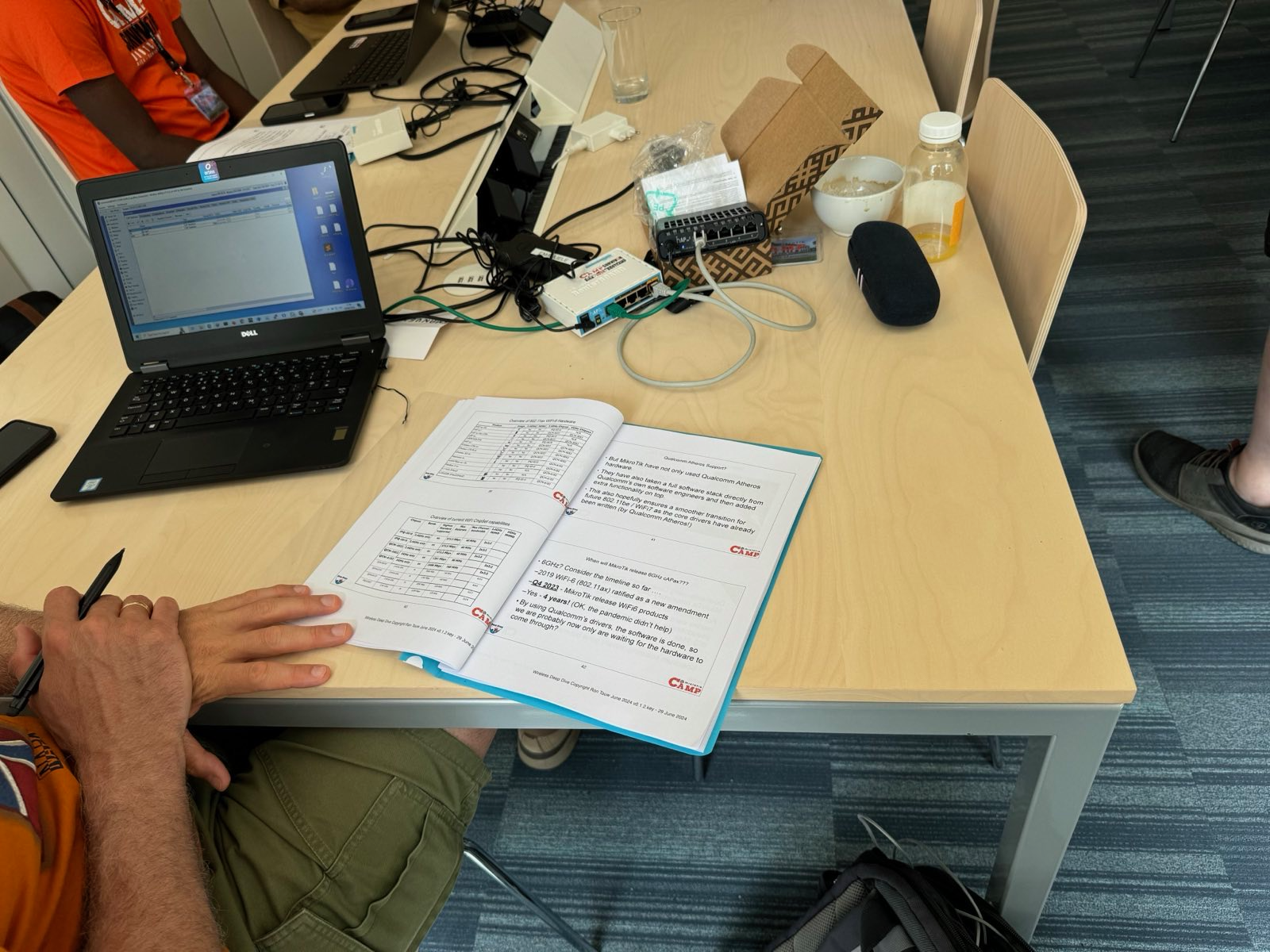
The training is three days of theory in a classroom environment and 23 different labs to put that learnt theory into practice using the supplied MikroTik Wireless Router interconnected with the trainer’s and the other students’ routers to form small networks. The theory/practical mix allows students throughout the three days to learn the MTCNA Syllabus which includes the following topics.
- An introduction into the company MikroTik, their brief history and their main manufacturing locations in Europe.
- An overview of what RouterOS, SwitchOS and SwitchOS Lite are capable of, what a RouterBOARD is and some of the differences between RouterOS v6 and RouterOS v7.
- How to access the WebFig control interface of RouterOS using a web browser, awareness of the admin password on a device’s label, the MikroTik mobile apps for Android and Apple devices, the standalone client tool WinBox4 via Layer 3 IP address and Layer 2 MAC address, via the RoMON service and also via serial console cables or the USB port. Accessing the device via SSH or Telnet.
- Learn how to secure the various RouterOS IP services such as www, winbox, ssh, telnet and ftp.
- How to access the Command Line Interface (CLI) and learn some simple tips to speed up config changes.
- RouterOS Upgrade best practice. How to safely and correctly upgrade or downgrade. Learning why the Stable version is not always the most stable version. Learn the differences between the different version builds of Beta/Test, Stable and Long Term.
- Be made aware of the firewall requirements of IPv6 now being enabled by default in RouterOS v7.
- Learning the importance of changing the default RouterOS System ID name and how to secure the MikroTik Neighbour Discovery protocol.
- Managing User groups and user accounts to maximise access security and how MikroTik supports modification of the user interface for users with less experience access.
- When to use Safe Mode when making system changes.
- Using the correct backup regime and method to ensure a reliable and robust restoration system is put into place for when the worse happens. Using the free MikroTik cloud backup solution for home users.
- How to reset various MikroTik RouterBOARDs. Learn the various timings for signalling to the boot process via the resrt button what is required, namely activating the backup RouterBoot or wiping back to factory default settings or initiating the NetInstall BootP process.
- When and how to use NetInstall to reinstall RouterOS without losing it’s configuration, to repair a router not booting or simply as another method for upgrading or downgrading RouterOS.
- Learn in detail about the different RouterOS licensing systems and why they are different for CHR virtual machine installs and MikroTik RouterBOARDS.
- Learn how to use the new vlan aware and Layer 2 hardware offloaded bridging system. We will also go into how Fast Path and Fast Track can reduce the CPU and memory usage on RouterOS even on lower spec. devices so as to still achieve gigabit throughput speeds by utilising the hardware’s ability to use Hardware Offloading.
- Knowing how ARP, DHCP and DNS works is a basic networking prerequisite for this course, but gain useful knowledge on how RouterOS supports these protocols with DHCP Client, DHCP Server, the DNS resolver and the interface ARP settings.
- Learn an introduction to Layer 3 static routing (for more detail on routing, this is covered on the MTCRE training course).
- We will also be looking into the basics of how to configure RouterOS to deliver a simple but secure and encrypted Wireless Access Point and how to configure RouterOS as a station client to enable it to connect to other wireless networks. We will overview the basics of the 802.11 protocol but for a more detailed teaching of MikroTik Wireless, especially the CAPsMAN protocol, this is covered in the MTCEWE training course. Subtopics will include how to ensure you have configured the wireless settings such as frequencies, DFS Radar detection and power levels to comply with local regulatory legislation enforced by Ofcom in the UK. To learn more about why this is so important, watch my presentation at the London MikroTik User Meeting in 2016. We will also cover MikroTik’s powerful access control lists as well as how to create a secure bridged point to point connection. The various wireless tools such as the scanner, frequency usage, sniffer and registration table will also be explained.
- Firewalling is another important topic covered on the MTCNA. How to design a firewall policy correctly to protect the router from attack and to protect IP based devices behind it. Learn about when to use the RAW filter to reduce the impact from DOS and DDOS attacks and how to use the connection tracking engine with Network Address Translation correctly to minimise the impact on the CPU and memory.
- How to manage network traffic using the RouterOS “simple queuing” system with an introduction into the new FQ-Codel and CAKE queue types.
- Learn more about how RouterOS handles secure tunneling protocols such as PPPoE and SSTP. Learn about how to correctly configure PPP Secrets and PPP profiles for various PPP VPN protocols.
- Learn about the MikroTik “Back to Home” app and how it uses WireGuard to provide secure access to remote MikroTik networks.
- An overview of all the diagnostic tools available within RouterOS, such as IP and MAC ping, IP and MAC traceroute, bandwidth testing, link speed testing with latency and jitter, email interface, graphing, the NetWatch tool, CPU Profiling, SNMP and using the System Log as well as Remote SysLog.
- How to use SNTP and NTP to ensure RouterOS is synchronised to a valid Date Time clock source and why it’s important
- Learn the correct methods to contact MikroTik support and how to increase your chances of MikroTik providing support by ensuring you provide them with the required information to maximise success in getting a helpful reply. 🙂
The MTCNA Qualification
The MTCNA certification is issued upon passing the MTCNA online examination with a score of 60% or higher, it is only available when invigilated by an approved Mikrotik Trainer and it has to be done in-person, therefore the certification is not available remotely or online.
Intended Target Audience:
This course is aimed at network administrators, integrators, Technical Managers, IT consultants and other technical users who already use or would like to start using Mikrotik RouterOS. It is also a good introduction to routing and firewall systems. It is not suitable for those with no prior TCP/IP knowledge!
Student Prerequisites:
- Knowledge of TCP/IP – IPv4 addressing, subnetting, OSI Model and basic networking skills are not covered by the course!
- Before attendance on MTCNA, it is a requirement to take the MikroTik “Example Test” which is available in your MikroTik Account before attending the course.
- You will be required to bring a Laptop with WiFi and Ethernet ports. If your laptop is non-windows based (e.g. OSX, Linux), then WinBox version 4 must be installed and working before arrival!
- Two CAT5 cables, min length 2m
- If the student wishes to take the MTCNA exam, government issued Photo ID will be required to prove your identity.
Timetable
1st Day: 09:00 – 17:00
2nd Day: 09:00 – 17:00
Last Day: 09:00 – 16:00
15 minute Breaks: 10:30 and 15:00
30 min Lunch: 12:30
On the last day there is an optional exam which runs for 1 hour.
What is included?
- 3 days of training.
- You get to keep the MikroTik Router used on the course.
- Tea/Coffee, soft drinks throughout the day.
- Buffet Lunch
- Training manual (also available to purchase from here)
- Free MikroTik RouterOS Level 4 / CHR P1 License on passing examination
- The exam – (if required)
Note 1: We reserve the right to cancel the course, (e.g. if there are insufficient numbers of students booking the course, or the trainer falls ill). In accordance with our standard Terms & Conditions, the refunded amount will only be what you have paid. If in the unlikely event we have to cancel, you will receive a full refund of the amount you have paid us. Any such cancellation on the part of the trainer not being able to attend will be limited to only what the student has paid for the training. Please bear this in mind when booking transport and/or hotels, especially if those components are ‘non-refundable”.
Note 2: Student cancels – A full refund for cancellations made by the student if paid in full with us at least 14 days before the advertised training date, 50% refund for 8-14 days notice and no refund for 7 days notice or less. If you intend to cancel but wish to instead attend a future training course, we can carry your booking monies over to a new date without any additional admin charge.